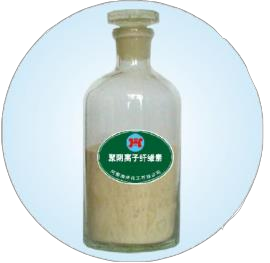
Description
Anionic cellulose ether featuring high degree of polymerization, high substitution degree and uniform substituent distribution. Per the manufacturer's documentation: odorless, non-toxic and highly hygroscopic; readily soluble in cold and hot water. This characterization is documentary and does not replace the applicable Safety Data Sheet (SDS).
Appearance
White to pale-yellow powder or granules.
Properties
Shares molecular structure with sodium carboxymethyl-cellulose (CMC). Benefiting from uniform substitution, PAC delivers better thickening, suspending, dispersing, emulsifying, bonding, salt-resistance, water-retention and colloid-protection performance compared with Na-CMC.
Main Advantages
- Good thermal stability.
- Resistance to acid, alkali and salt. Stable performance within pH 3–11 for harsh polar environments.
- Excellent compatibility with other cellulose ethers, water-soluble gums, softeners and resins.
- Good solubility: dissolves rapidly in cold/hot water with simple agitation.
- High solution stability: aqueous PAC solution is light-stable with long shelf life, anti-microbial and non-fermenting.
- Low dosage: under identical field conditions, PAC dosage is only 30%–60% of CMC.
Fluid Systems Mentioned
Specifications
| Parameter | Value / Limit | Unit | Test Conditions |
|---|---|---|---|
| Moisture | ≤10.0 | % | — |
| Apparent Viscosity | ≥50 | mPa·s | — |
| API Fluid Loss | ≤23.0 | mL | — |
| Starch or starch derivatives | None | — | — |
Application
PAC provides superior viscosity-building, fluid-loss control, salt-tolerance and temperature-resistance versus CMC. Suitable for fresh-water, salt-water, saturated-salt-water and seawater drilling-fluid systems. At half dosage of CMC, PAC achieves equivalent viscosity-building & filtration-control effect in fresh-water mud, and even better performance in 4% salt-water and saturated-salt-water mud.
Dosage Guidance
No absolute dosage range is documented. The manufacturer states that, under identical field conditions, PAC consumption is approximately 30%–60% of CMC consumption.
Packaging & Storage
Not specified in the available technical documentation for this grade. Please consult Market Alliance for availability and packaging.
Available Documentation
Catalog technical data sheet: available. Request the applicable SDS and CoA; availability subject to confirmation.
Request technical data sheet, SDS and documentation applicable to the product and batch